
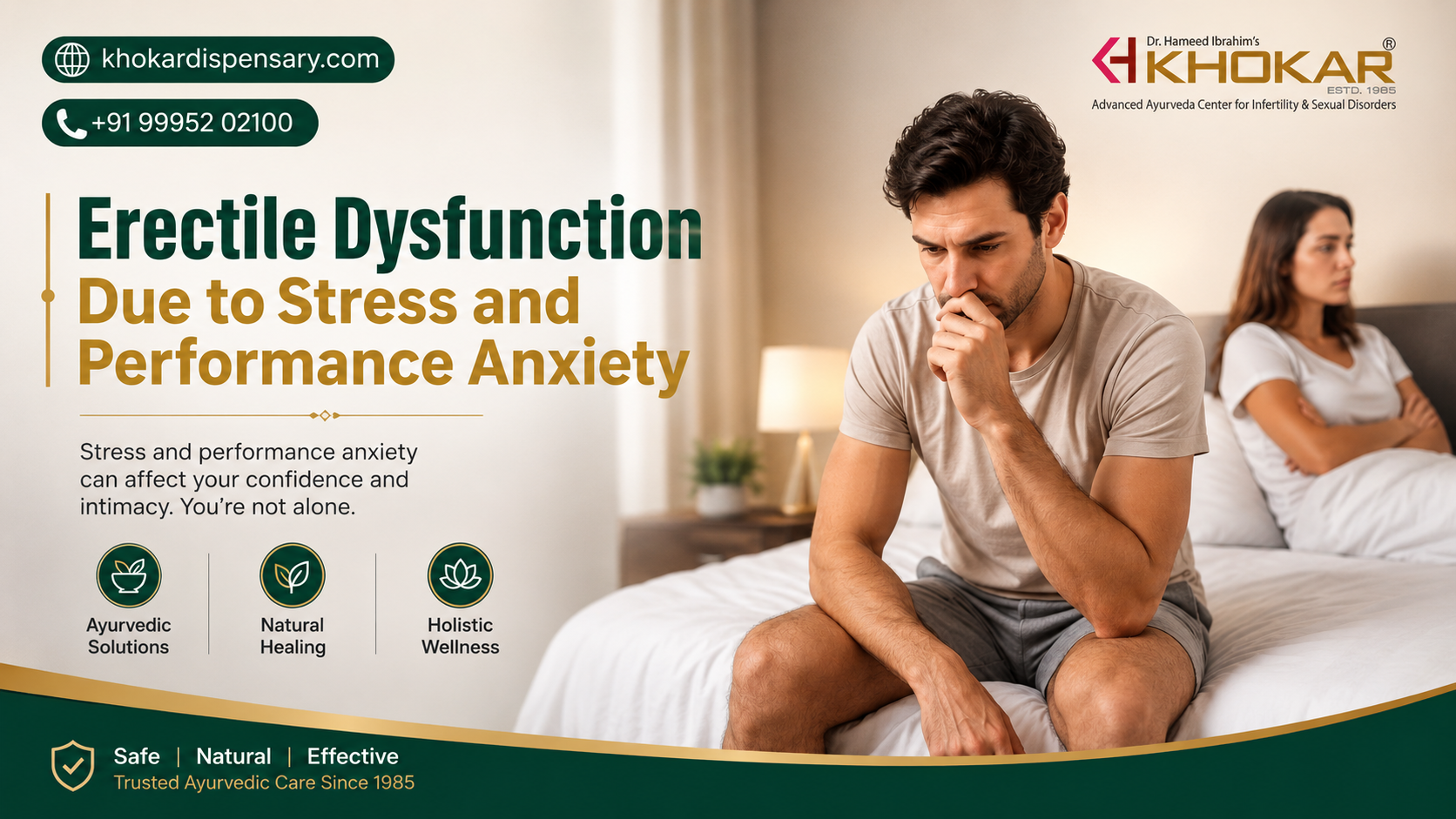
Erectile Dysfunction Due to Stress and Performance Anxiety. Erectile dysfunction (ED) is commonly associated with physical conditions, but emotional factors can also play a major role. Stress and performance anxiety may interfere with sexual arousal, confidence and the body's normal erection response. As a result, some men may experience difficulty getting or maintaining an erection even when they do not have an obvious physical problem.
For some men, the problem starts after one unsuccessful sexual experience. They then worry that it might happen again. That worry increases anxiety, which can make it harder to become or remain aroused the next time. Gradually, this can create a frustrating cycle.
At Khokar Dispensary, understanding the possible causes of erectile dysfunction due to stress and performance anxiety is an important first step towards seeking appropriate professional guidance.
How Stress Can Affect Erectile Function
Sexual arousal involves communication between the brain, nerves, hormones and blood vessels. When a person feels relaxed and sexually stimulated, the body can support the physiological processes required for an erection.
Stress can interfere with this process.
Work pressure, financial concerns, relationship difficulties, family responsibilities and lack of sleep can all contribute to emotional tension. Consequently, the mind may remain focused on problems instead of sexual stimulation.
Long-term stress may also affect sleep, energy levels and general wellbeing. Therefore, improving overall stress management can be an important part of addressing erection difficulties.
What Is Performance Anxiety?
Sexual performance anxiety refers to excessive worry about sexual performance. A man may worry about whether he will get an erection, maintain it for long enough, satisfy his partner or avoid another disappointing experience.
These thoughts can become distracting during intimacy.
For example, instead of concentrating on physical sensations and emotional connection, someone may repeatedly think:
- “What if I cannot get an erection?”
- “Will my partner be disappointed?”
- “What if it happens again?”
- “Am I performing well enough?”
- “Why am I losing my erection?”
Ironically, focusing heavily on these concerns can make relaxation and arousal more difficult.
The Stress-Anxiety-ED Cycle
Performance anxiety and erectile difficulties can reinforce each other.
| Stage | What may happen |
|---|---|
| Initial difficulty | An erection becomes difficult to achieve or maintain |
| Concern | The man worries about the experience |
| Anxiety | Stress increases during future intimacy |
| Reduced arousal | Attention shifts from pleasure to performance |
| Another difficulty | Maintaining an erection becomes harder |
| Loss of confidence | The person expects the problem to happen again |
Breaking this cycle often requires addressing both the physical and psychological factors involved.
Signs Stress or Anxiety May Be Contributing to ED
Emotional factors may play a role when erection problems show certain patterns. For example, a man may have an erection during sleep or upon waking but experience difficulty during sexual activity.
Similarly, the problem may appear mainly in situations where he feels pressure to perform.
Other possible clues include:
- ED begins during a particularly stressful period.
- Erections vary depending on the situation.
- Sexual desire remains present, but erections become unreliable.
- The problem occurs mainly with a partner rather than during masturbation.
- Anxiety increases immediately before or during sex.
- Previous unsuccessful experiences create fear about future intimacy.
However, these signs do not prove that anxiety is the only cause. Erectile dysfunction can have several contributing factors, so professional assessment remains important.
Physical and Psychological Causes Can Occur Together
It is not always a simple case of “physical or psychological.”
For instance, a man with diabetes, high blood pressure, obesity or cardiovascular disease may develop some degree of erectile difficulty. After experiencing the problem, he may then develop performance anxiety. The physical issue and anxiety can consequently reinforce one another.
Likewise, certain medicines, hormonal changes, neurological conditions, smoking and excessive alcohol consumption may affect erectile function.
Therefore, assuming that every case of ED comes from stress can delay appropriate evaluation.
Stress vs Performance Anxiety: Is There a Difference?
Although the two conditions can overlap, they are not exactly identical.
General stress can affect many areas of life. A demanding job, financial pressure or ongoing personal concerns may reduce sexual interest and make arousal more difficult.
Performance anxiety, on the other hand, specifically focuses on sexual performance or the fear of failure.
| General Stress | Performance Anxiety |
|---|---|
| Can affect everyday life | Mainly focused on sexual performance |
| May reduce energy and desire | Often increases during intimacy |
| Can develop from work or personal pressure | Often follows fear of sexual failure |
| May affect sleep and mood | Can cause intense worry before sex |
| Stress management may help | Counselling and communication may help |
In reality, both can occur at the same time.
How Relationship Pressure Can Affect Erections
Sexual confidence can change when a person feels judged, rushed or pressured.
Communication problems, unresolved arguments, fear of disappointing a partner or concerns about attraction can all contribute to anxiety. Furthermore, avoiding conversations about the problem may increase tension between partners.
Open communication can therefore make a meaningful difference.
Instead of treating ED as a personal failure, couples can view it as a health concern that deserves patience and understanding. This approach may reduce pressure and create a more comfortable environment for intimacy.
Can Lack of Sleep Contribute to the Problem?
Yes, poor sleep can affect overall health, energy and emotional wellbeing. A person who regularly sleeps poorly may feel more stressed and less interested in sexual activity.
Therefore, establishing a consistent sleep routine can support broader efforts to improve sexual wellbeing.
Aim for a regular bedtime, reduce unnecessary screen use before sleep and address persistent sleep difficulties with professional guidance when necessary.
Related Post:
» Ayurvedic Remedies For Sexual Wellness In Men
» What is Sexual Disorder & Ayurvedic Treatment for Sexual Problems in Kerala
» How to Overcome Sexual Performance Anxiety
» Does Stress Can Cause a Low Sexual Drive
» How depression affects Sexual life
Lifestyle Changes That May Help
Lifestyle changes cannot solve every case of ED, but they can support general physical and sexual health.
Exercise Regularly
Physical activity supports cardiovascular health and can help manage stress. Even moderate activities such as walking can become part of a healthier routine.
Manage Stress
Relaxation techniques, breathing exercises, mindfulness, hobbies and regular physical activity may help reduce daily tension.
Limit Alcohol
Excessive alcohol consumption can interfere with sexual function and may also increase anxiety or affect sleep.
Stop Smoking
Smoking can damage blood vessels and contribute to erectile problems. Quitting can support cardiovascular and sexual health.
Maintain a Healthy Weight
A balanced diet and regular activity can support metabolic and cardiovascular health, both of which matter for erectile function.
Treatment Options for Anxiety-Related ED
Treatment depends on the underlying cause.
If psychological factors contribute significantly, counselling or sex therapy may help a person understand anxiety patterns and develop healthier responses to sexual situations.
Cognitive behavioural therapy (CBT), for example, can help people identify unhelpful thoughts and develop more constructive ways of responding to anxiety.
In some cases, a healthcare professional may also consider medication for ED. However, medicines should only be used according to appropriate medical advice, particularly because ED medicines can interact with certain medicines and health conditions.
Importantly, do not purchase unverified sexual-performance products simply because they promise immediate results.
When Should You Seek Professional Help?
Occasional erection difficulties can happen to many men, particularly during periods of stress, tiredness or excessive alcohol consumption.
However, repeated or persistent ED deserves professional attention.
You should consider seeking help when:
- The problem continues repeatedly.
- ED affects your relationship or confidence.
- You have diabetes, high blood pressure or other health concerns.
- You take medicines that may affect sexual function.
- You experience reduced sexual desire alongside ED.
- You have other symptoms such as pain or urinary problems.
- The problem appeared suddenly without an obvious explanation.
A proper assessment can help identify whether emotional, physical or combined factors are involved.
Why Early Support Matters
Many men feel embarrassed about discussing erectile problems. Unfortunately, delaying the conversation can allow anxiety and avoidance to grow.
Getting professional advice does not mean that something is seriously wrong. Instead, it provides an opportunity to understand the possible causes and discuss suitable options.
Furthermore, ED can sometimes be an early indicator of underlying cardiovascular or metabolic problems. For that reason, persistent symptoms should not simply be dismissed as stress.
How Khokar Dispensary Can Help
At Khokar Dispensary, men can seek professional guidance about concerns involving sexual health and erectile difficulties. A careful discussion can help identify possible contributing factors and determine whether further evaluation is appropriate.
Rather than focusing only on the erection itself, a broader approach considers lifestyle, stress, emotional wellbeing, existing health conditions and other relevant factors.
Most importantly, treatment should be based on the individual's circumstances rather than a one-size-fits-all solution.
Conclusion
Erectile dysfunction due to stress and performance anxiety can affect confidence, relationships and quality of life, but it does not need to remain an unexplained or embarrassing problem. Stress, anxiety and physical health factors can interact in complicated ways, so understanding the full picture is important.
Healthy lifestyle habits, better stress management, open communication and professional support can all play a role. At the same time, persistent ED deserves proper medical evaluation rather than self-diagnosis.
If erection difficulties are becoming a regular concern, Khokar Dispensary can provide guidance to help you understand the possible causes and explore appropriate next steps with greater confidence.
Social:
https://in.pinterest.com/pin/350788258500156727/
https://x.com/khokarclinic/status/2087106835056877856
https://www.linkedin.com/feed/update/urn:li:share:7492875391045554180/


0 comments:
Post a Comment